As horsepower increases, fuel delivery becomes one of the first limiting factors in a performance build. While pumps and injectors get most of the attention, the component that often determines whether a fuel system is reliable or problematic is the fuel hat.
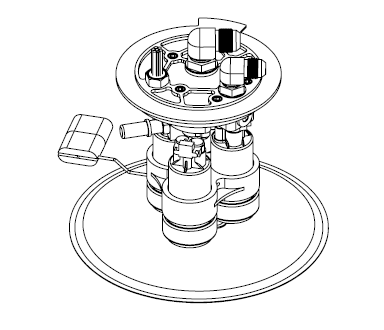
A fuel hat isn't just a mounting plate for pumps. It's the central distribution point that controls how fuel enters and exits the tank, how pumps are supported, and how reliably fuel is delivered under high demand.
Design matters — especially at higher horsepower levels.
What a Fuel Hat Actually Does
A fuel hat mounts to the top of the fuel tank and serves several critical functions:
-
Secures one or more fuel pumps in the tank
-
Routes fuel from the pumps to the feed line.
-
Manages electrical connections for the pumps
-
Seals the tank while maintaining proper venting
At higher power levels, these functions must be handled without restriction, leaks, or voltage loss. That's where many factory and entry-level aftermarket solutions fall short.
Why Factory Fuel Housings Become a Limitation
OEM fuel modules are designed around:
-
Single low-output pumps
-
Modest fuel demand
-
Long-term street durability
Once horsepower climbs, factory housings can struggle with:
-
Insufficient flow capacity
-
Restrictive internal passages
-
Hose clamps and rubber lines that degrade over time
-
Inconsistent pump support under high load
These limitations don't always appear immediately — they often manifest as intermittent fuel pressure drops, heat-related issues, or tuning inconsistencies.
Why Fuel Hat Design Matters at High Horsepower
A properly designed fuel hat addresses these limitations directly.
Key design considerations include:
-
Internal flow path size and shape
-
How multiple pumps are supplied and merged
-
Seal integrity under pressure.
-
Electrical reliability at high current loads
At high horsepower, fuel delivery issues not only limit power but can also cause engine failure. That's why fuel hats must be designed as integral components of the fuel system, not as accessories.
Snow Fuel Systems Fuel Hats: Purpose-Built, Not Adapted
Snow Fuel Systems fuel hats are engineered specifically for high-output fuel delivery, rather than adapting factory-style designs beyond their limits.
CNC-Machined Billet Construction
Snow fuel hats are machined from 6061 billet aluminum, allowing precise control over internal passages and sealing surfaces. This eliminates flex, deformation, and tolerance stack-ups that can cause leaks or restrictions.
Internal Manifold Design
Rather than relying on external hoses, clamps, or plastic lines, Snow fuel hats use CNC-machined internal passages to route fuel cleanly and consistently from multiple pumps into the feed outlet.
This improves:
-
Flow consistency
-
Reliability
-
Serviceability
Fuel Supply at the Pump: Why the Pickup Matters
Delivering fuel to the pumps is just as crucial as routing it out of the tank.
Snow Fuel Systems fuel hats utilize a moisture-wicking fuel sock designed to feed all pumps simultaneously, rather than isolating each pump to its own pickup.
This design allows fuel to be drawn evenly across the entire pickup surface, ensuring a consistent supply to every pump even when conditions aren't ideal.
Why This Matters Under Real-World Conditions
During hard cornering, acceleration, braking, or low-fuel situations, fuel inside the tank can move away from a traditional pickup. If only part of the pickup is submerged, other fuel systems can starve individual pumps.
The Snow moisture-wicking sock:
-
Continues drawing fuel even when only part of the sock is submerged
-
Supplies all pumps evenly, rather than favoring one.
-
Reduces the chance of momentary fuel starvation
This is especially important for:
-
Street cars that see cornering and braking loads
-
Road race and autocross applications
-
Vehicles running the tank low during long sessions
Consistent pump feed equals consistent fuel pressure — and that consistency shows up in tuning and reliability.
OEM Tank Compatibility: A Key Advantage
One of the most important design priorities behind Snow Fuel Systems fuel hats is OEM fuel tank compatibility.
By designing hats that drop into factory tanks, Snow allows racers to:
-
Upgrade fuel delivery without replacing the fuel tank.
-
Reduce overall system cost.
-
Retain factory tank fitment and mounting.
This approach simplifies installation while still supporting the fuel demands of modern high-horsepower combinations.
TI Automotive Fuel Pumps: A Proven Foundation
Snow Fuel Systems fuel hats are designed around TI Automotive fuel pumps (formerly Walbro), a brand trusted throughout professional motorsports.
Using TI Automotive pumps ensures:
-
Consistent flow under high demand
-
Proven reliability with gasoline and E85
-
Broad data support for tuning
Fuel hats are only as good as the pumps they support. Designing around proven pump platforms eliminates uncertainty in system performance.
Why Multi-Pump Control Matters
As horsepower increases, a single pump is often insufficient. Multi-pump fuel hats allow fuel delivery to scale with demand.
Proper multi-pump design:
-
Ensures even fuel distribution
-
Prevents pump starvation
-
Allows staged or constant pump operation depending on strategy
Snow Fuel Systems fuel hats are designed to support high-output, multi-pump configurations without introducing complexity or weak points.
Fuel Hats and System Consistency
Fuel delivery problems often manifest as tuning issues, rather than hardware failures. Inconsistent fuel pressure leads to inconsistent air-fuel ratios, which makes tuning unpredictable.
A well-designed fuel hat contributes to:
-
Stable fuel pressure
-
Predictable tuning changes
-
Reduced heat-related issues
-
Improved long-term reliability
At higher power levels, consistency is just as important as peak flow.
Why Fuel Hats Are a Foundation Component
Fuel hats aren't flashy, but they are foundational. Every downstream component — pumps, lines, rails, injectors — depends on what happens at the top of the tank.
At high horsepower, fuel hats should be treated as critical infrastructure, not an afterthought.
Why Design and Flow Matter
At lower power levels, many fuel system shortcuts go unnoticed. As demand increases, those shortcuts become problems.
Fuel hats, designed with proper flow paths, sealing, and pump feed strategies, allow the rest of the fuel system to perform its job reliably. That's why design matters — and why purpose-built solutions outperform adapted ones.