
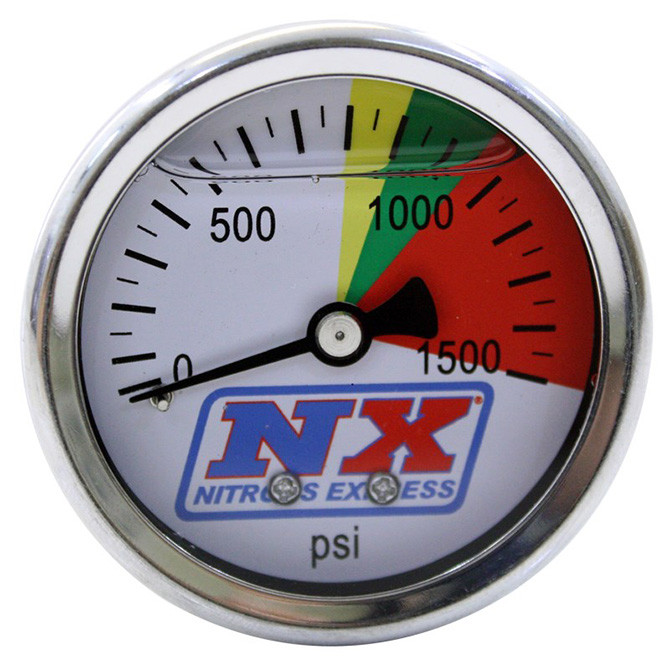
Nitrous bottle pressure is one of the most important — and most misunderstood — variables in a nitrous system. Two cars with identical jetting and hardware can produce completely different results if the bottle pressure isn't controlled correctly.
Horsepower output, air-fuel ratio, and overall consistency are all directly affected by bottle pressure. That's why experienced racers treat pressure control as a core part of the tune-up, not an afterthought.
What Bottle Pressure Actually Controls
Nitrous systems rely on liquid nitrous oxide flowing at a predictable rate. That flow rate is directly tied to bottle pressure.
When bottle pressure changes:
-
Nitrous flow changes
-
Air-fuel ratio changes
-
Power output changes
Jetting alone cannot compensate for inconsistent pressure. Stable bottle pressure is what allows jetting and tuning adjustments to work as intended.
Ideal Nitrous Bottle Pressure (General Context)
Most nitrous systems are designed to operate within a specific pressure range, commonly around 900–1,050 PSI, depending on the system and application.
Below this range:
-
Nitrous flow is reduced.
-
Power output drops
-
Consistency suffers
Above this range:
-
Flow becomes less predictable.
-
The tune can lean out.
-
Component stress increases
The exact target pressure should always be based on the system design and tuning strategy. What matters most is repeatability, not chasing the highest possible number.
Why Bottle Pressure Changes So Easily
Nitrous pressure is affected by:
-
Ambient temperature
-
Bottle temperature
-
Time between passes
-
Whether the bottle was recently purged
-
How much nitrous remains in the bottle
As the bottle empties, the pressure behavior can change more rapidly in response to temperature fluctuations. That's why pressure should be monitored and controlled throughout a session, rather than assumed to be stable from one run to the next.
Bottle Heaters: Controlling Pressure, Not Making Power
Bottle heaters exist for one primary reason: to bring nitrous pressure into the desired range and maintain it consistently.
A bottle heater does not create horsepower on its own. It allows the nitrous system to operate within its intended pressure window so the tune remains predictable.
Proper heater use:
-
Brings pressure up evenly
-
Helps prevent pressure swings between passes
-
Improves repeatability
Heaters should always be used in conjunction with a pressure gauge or a pressure-based control strategy, rather than being switched on mindlessly.
Why Overheating the Bottle Is a Problem
Excessive bottle pressure is just as harmful as low pressure.
Overheating the bottle can:
-
Lean out the tune
-
Increase solenoid and component stress.
-
Reduce consistency
-
Create unnecessary safety concerns.
Pressure control is about stability, not maximum pressure. The goal is to reach the target range and stay there.
Purge Systems: Clearing the Line and Managing Pressure
A purge system is commonly associated with clearing gaseous nitrous oxide from the feed line — and that is its primary role — but it can also be used to reduce bottle pressure when the pressure exceeds the desired range.
What a Purge System Does
-
Removes gaseous nitrous from the feed line
-
Ensures liquid nitrous reaches the solenoid immediately
-
Allows controlled pressure reduction if the bottle pressure is too high
Without purging:
-
Gas pockets can delay nitrous delivery.
-
Initial activation can be inconsistent.
-
The first hit may be softer than expected.
Using the purge to bleed off excess pressure allows racers to bring bottle pressure down into the target window rather than waiting for ambient conditions to do it naturally.
How Bottle Heaters and Purges Work Together
Bottle heaters and purge systems serve different but complementary roles.
-
The heater raises and stabilizes the bottle pressure.
-
The purge ensures liquid nitrous is at the solenoid and can be used to fine-tune pressure downward if needed.
Using both allows racers to:
-
Reach target pressure quickly.
-
Correct slight over-pressure situations
-
Maintain consistent conditions pass after pass.
Together, they help ensure the nitrous system sees the same conditions every time it is activated.
Pressure Consistency Wins More Races Than Peak Numbers
Many racers focus on peak horsepower while overlooking pressure consistency. In practice, consistent bottle pressure:
-
Produces repeatable elapsed times
-
Makes tuning changes meaningful
-
Reduces unexpected air-fuel ratio swings
Bracket racers, heads-up racers, and street/strip builds all benefit from pressure management — just for different reasons.
Common Nitrous Bottle Pressure Mistakes
Some of the most common issues include:
-
Relying on ambient temperature instead of a heater
-
Overheating the bottle to chase power
-
Ignoring purge use when bottle pressure is too high
-
Assuming jetting will compensate for pressure changes
Nitrous systems are predictable when pressure is controlled. Problems usually appear when it isn't.
Why Pressure Control Matters
Bottle pressure isn't a background detail — it's a primary tuning variable. Proper pressure control allows a nitrous system to deliver predictable power, maintain a stable tune, and perform consistently run after run.
Bottle heaters and purge systems don't add power on their own, but they give racers control over pressure and delivery conditions. That control is what separates a frustrating nitrous setup from a reliable one.